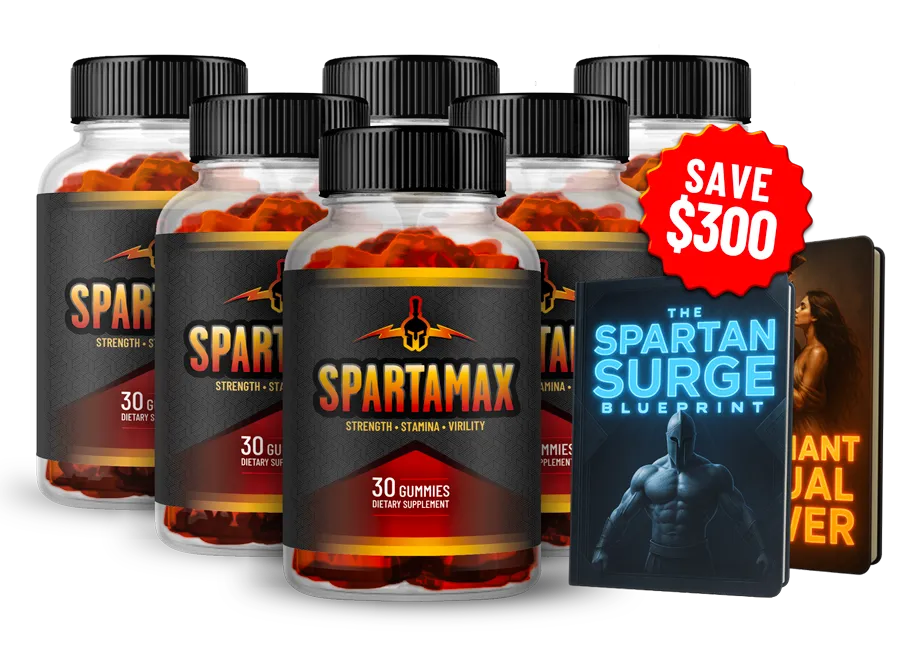
Why the four-mechanism gummy approach outperforms single-ingredient alternatives.
Last Updated: April 10, 2026 · Medically Reviewed by Dr. Marcus Reid, MD
Not all male supplements are built the same way. Some target one mechanism. Others throw fifty ingredients at the wall. Here is how Spartamax stacks up against the most common alternatives — evaluated honestly across the dimensions that actually matter.
Single-ingredient testosterone boosters — standalone Tongkat Ali, standalone Tribulus, standalone fenugreek — address one hormonal pathway. That is useful if testosterone is your only issue. For most men over 35, it is not. Cortisol from chronic stress is suppressing the testosterone that single-ingredient products try to raise. Circulation is declining, so even improved hormonal signals cannot reach target tissues effectively. And libido pathways need their own support through different mechanisms (PMID: 19781622).
A man taking Tongkat Ali alone may see modest improvement in his blood work. He may not feel meaningfully different day to day because the other three mechanisms are still holding him back. The four-mechanism gap is why single-pathway products produce the frustrating partial results most men report.
Testosterone replacement therapy is the most effective intervention for clinically low testosterone (consistently below 300 ng/dL). It delivers synthetic testosterone via injections, patches, or gels. For men with diagnosed hypogonadism, TRT can be life-changing.
The tradeoffs are real though: injections every 1–2 weeks, $100–300/month without insurance, cardiovascular risk monitoring, fertility suppression (TRT reduces sperm production), and lifelong dependency — once you start, your body further reduces natural production, making it difficult to stop (PMID: 26609282). For men in the “low normal” range (300–500 ng/dL), botanical support offers a gentler first step without those commitments.
Prescription PDE5 inhibitors are effective per-use medications for performance. They work fast and reliably. They also cost $30–70 per dose, produce side effects (headaches, visual disturbances, congestion), and do nothing to address the underlying biological decline causing the problem. They treat the symptom each time you take one. Spartamax provides daily support for the systems that generate natural performance — a fundamentally different approach targeting causes rather than managing episodes.
Building four-mechanism coverage yourself requires separate products: Tongkat Ali ($25–40/month), L-Arginine ($15–25), Maca ($15–20), Ashwagandha ($15–25). Total: $70–110/month from four bottles with four dosing schedules and no unified guarantee. Spartamax consolidates the same coverage at $49–69/month in one gummy. Lower cost, better compliance, synergistic formulation, and a single guarantee covering everything.
Compliance matters more than most men realize. Managing four separate bottles means four opportunities to skip or forget each day. Botanical compounds require daily consistency to reach effective tissue levels. The gummy format removes the friction that capsule stacks create.
Most male supplements come in large capsules that require water, dissolve slowly in stomach acid, and are easy to forget because nobody enjoys taking them. Spartamax gummies begin absorbing sublingually in the mouth, taste pleasant enough that men actually look forward to taking them, and require no water. The format difference sounds trivial but compliance determines outcomes. A supplement you skip three days a week cannot build to effective levels regardless of ingredient quality.
Most supplement guarantees give you 30–90 days. Botanical compounds need 3–5 months to reach full optimization. A 30-day guarantee expires before you can properly evaluate whether the formula works. The 365-day guarantee on Spartamax covers the full optimization window plus nine additional months. That length of protection is rare in the industry and only sustainable if the majority of users see enough benefit to continue.
For general nutritional support, a basic multivitamin at $10–25/month covers broad micronutrient gaps. For isolated testosterone support, single-ingredient boosters at $20–40 address one pathway. For clinically diagnosed low testosterone, prescription TRT under medical supervision is most effective.
For the multi-dimensional performance decline most men experience after 35 — where testosterone, circulation, libido, and stress all need simultaneous attention — a four-mechanism formula represents the most complete natural approach. The pricing and package details are available on the official site.
Before spending money on any product in this category, ask five questions. 1. How many performance mechanisms does it address? Testosterone alone is one. Circulation alone is one. The decline involves at least four. 2. Are the ingredients documented on PubMed? If a company cannot point to published research on their ingredients, the formula is speculative. 3. What is the guarantee length? Botanical supplements need months, not weeks. A short guarantee means the company knows many users will not see results in time to request a refund. 4. Is the company identifiable? Physical address, named retailer, functional customer support. 5. Do reviews include honest criticism? A product with only 5-star reviews is not transparent. Real user bases include people who needed more time or experienced modest results.
Most men who have tried and abandoned male supplements were using single-pathway products. A testosterone booster cannot fix poor circulation. A circulation supplement cannot address stress-related cortisol elevation. An adaptogen cannot directly improve blood flow. Each mechanism requires its own dedicated support (PMID: 29091029, PMID: 26609282).
The question is not whether individual ingredients work — the published research on Tongkat Ali, L-Arginine, Ashwagandha, and Maca confirms they do within their respective domains. The question is whether addressing one mechanism while ignoring three others produces meaningful real-world improvement. For most men, the answer has been no.
Reframing the price comparison by mechanism rather than by bottle changes the math. A $25 Tongkat Ali supplement costs $25 per mechanism. A $15 L-Arginine product costs $15 per mechanism. Covering four mechanisms separately costs $70–110 total. Spartamax at $49–69 covers four mechanisms, making the cost per mechanism $12–17 — lower than any individual product. The consolidated format also eliminates the compliance challenge of managing multiple bottles.
If blood testing confirms that testosterone is your only measurable issue — circulation is fine, stress is managed, libido is not a concern — a focused testosterone booster may be sufficient. If your primary concern is workout performance and you already have healthy hormone levels, an L-Arginine or beet root supplement may be enough. Single-pathway products are appropriate when only one pathway needs support. They become inadequate when the decline is multi-dimensional, which is the typical pattern after 35.
This page compares product categories, not specific brand-vs-brand matchups. Individual products within each category vary in quality, dosing, and formulation. The comparison focuses on mechanism coverage, format, guarantee structure, and cost — the factors most predictive of whether a product will produce meaningful improvement for the typical man experiencing age-related performance decline. For specific ingredient research, see the full breakdown.
The comparison table and analysis above provide the framework. Your specific situation determines which option makes sense. If you are experiencing decline across multiple dimensions — energy, stamina, performance, and stress — a multi-mechanism approach addresses all four simultaneously. If only one area concerns you, a targeted single-ingredient product may suffice. Either way, look for documented ingredients, adequate guarantee length, and a company willing to stand behind their formula long enough for you to properly evaluate it.
Each supplement format has distinct advantages and limitations that affect real-world results. Capsules are the most common format. They require water, take 20–45 minutes to dissolve in stomach acid before active ingredients begin absorbing, and are easy to skip because the experience of swallowing pills is neutral at best. For men taking multiple supplements, capsule fatigue is a genuine compliance problem.
Powders offer flexible dosing and fast absorption when mixed into liquid. The tradeoff: preparation time, taste issues (many male supplement powders taste terrible), and the inconvenience of needing a shaker bottle and clean water. Powders work well for men with established morning smoothie routines. They fail for men who want something quick.
Gummies begin breaking down immediately in the mouth. Sublingual membranes absorb certain compounds directly into the bloodstream before stomach acid is involved. They taste pleasant, require no water, and take 5 seconds. The compliance advantage is substantial — men who enjoy taking their supplement take it consistently. Consistency determines whether botanical compounds reach effective tissue levels.
Supplement guarantees are not created equal, and the differences matter more than most buyers realize. A 30-day guarantee with a botanical supplement is essentially decorative. Botanical compounds like Tongkat Ali and Ashwagandha need 4–12 weeks to produce their full effects. By the time you can properly evaluate, the guarantee has expired. Companies offering 30-day guarantees on slow-acting formulas are banking on the timing gap.
A 90-day guarantee covers the minimum evaluation window but leaves little margin. If life gets busy and you start late or miss days, the clock runs out before the assessment is complete.
A 365-day guarantee eliminates timing pressure entirely. It covers the 3–5 month optimization window, gives room for inconsistent starts, and still leaves months of protection afterward. This length of guarantee is rare because it is only financially sustainable when the product works for enough users that refund rates stay manageable. The guarantee length itself is a signal about how the company evaluates its own formula.
Can I take Spartamax with a multivitamin? Yes. Spartamax provides botanical compounds (Tongkat Ali, Ashwagandha, Maca) that standard multivitamins do not contain. Minimal ingredient overlap. Should I stop my current T-booster? If switching to Spartamax, the four-mechanism formula already includes testosterone support through Tongkat Ali and Tribulus. Running both simultaneously is unnecessary. Is Spartamax a replacement for TRT? No. For men with clinically low testosterone (below 300 ng/dL consistently), TRT under medical supervision is appropriate. Spartamax is botanical support for age-related decline in the normal-to-low-normal range. Why not just buy each ingredient separately? You can. The ingredients page lists everything in the formula. The consolidated gummy offers lower total cost, better compliance, synergistic formulation, and a unified guarantee that separate purchases cannot match.
The trajectory is remarkably consistent among men who end up using multi-mechanism formulas. They start with a single testosterone booster. Modest results. They add an L-Arginine product. Some circulation improvement but the bottles are piling up. They try an adaptogen for stress. Three bottles, three schedules, $80–120/month. Compliance drops. Results plateau. Then they consolidate into a formula covering all four mechanisms in one serving and describe the experience as "finally working" — not because the individual ingredients changed, but because daily consistency across all four pathways finally became sustainable.
The lesson: ingredient quality matters, but compliance matters more. The best formula you skip three days a week loses to a good formula you take every morning without thinking about it. Format, taste, and convenience are not marketing features. They are compliance features. And compliance determines outcomes.
The comparison framework above applies to any male supplement you evaluate. Count the mechanisms. Check the research. Verify the guarantee length. Assess the format for daily compliance. Those four criteria predict real-world results more reliably than marketing claims or star ratings.